Roof and façade inspection without scaffolding or an aerial lift
- Detail down to 5 mm per pixel
- Visual imagery
- Thermal on request
From the ground you rarely see where the problem is. We record the complete roof and façade surface systematically and take additional detail images where needed. Each zone of attention gets a number in the report, so your contractor, expert or property manager can go straight to it. Usually without a scaffold having to go up first.
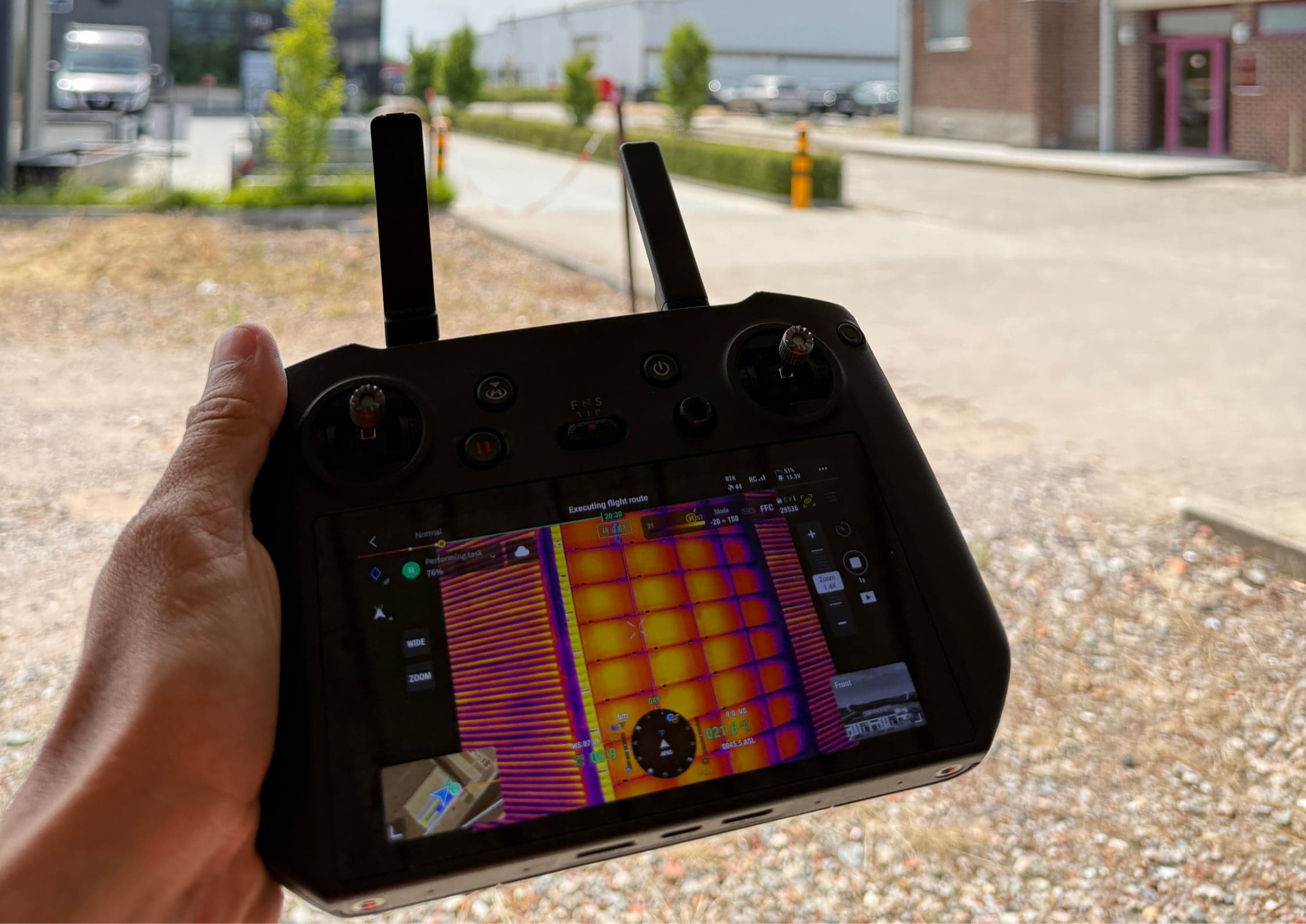

First know where the problem is, then arrange access
A leak, a loose component, a damaged junction or a weathered area of façade is at best half visible from ground level. A scaffold or aerial lift costs time, people and safety measures before it is even clear where you need to look. A drone inspection shortens that first round.
What a drone does not do: see through materials. Hidden moisture, structural damage or causes behind a finish remain work for a building surveyor. We deliver the images that tell that surveyor where to start.
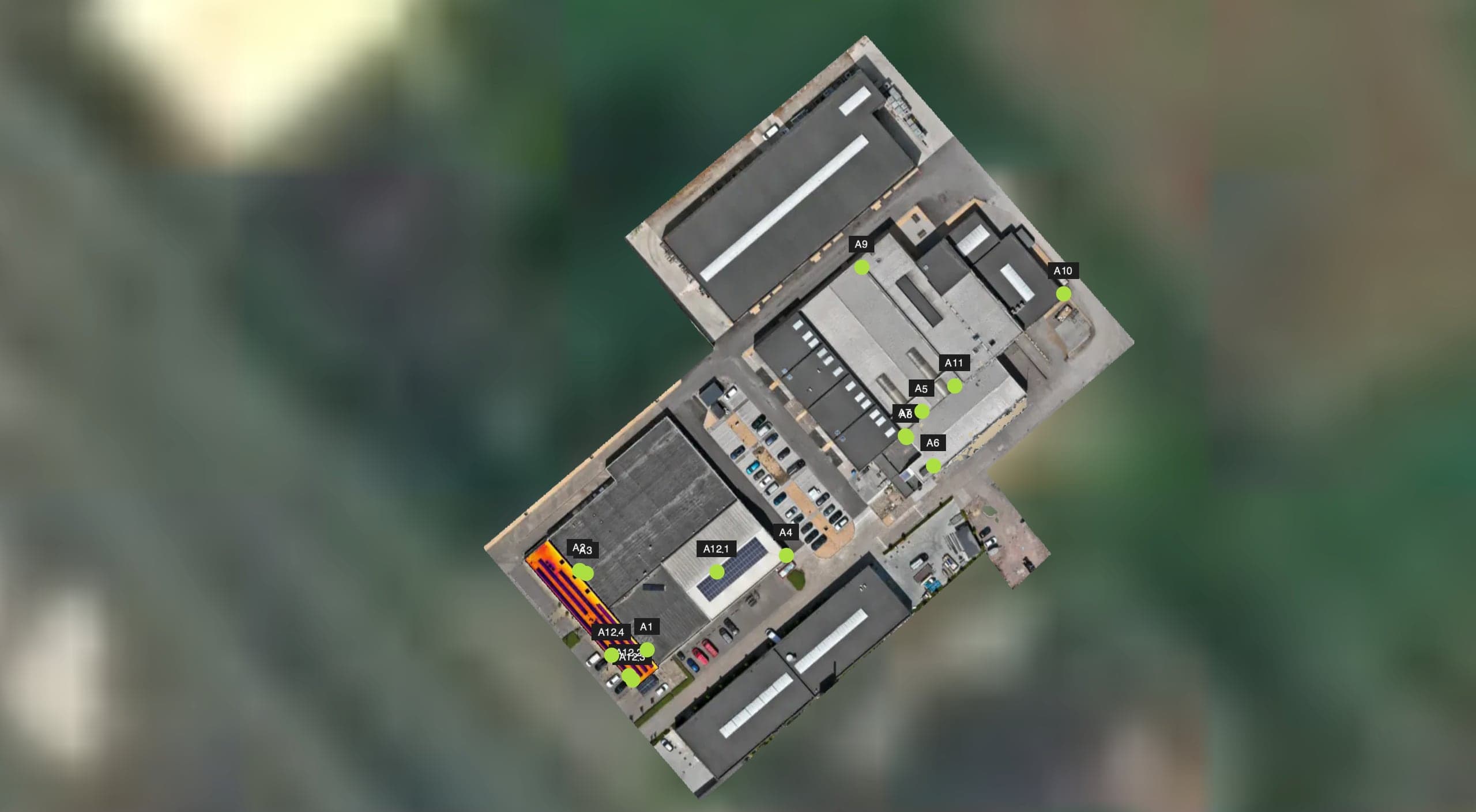
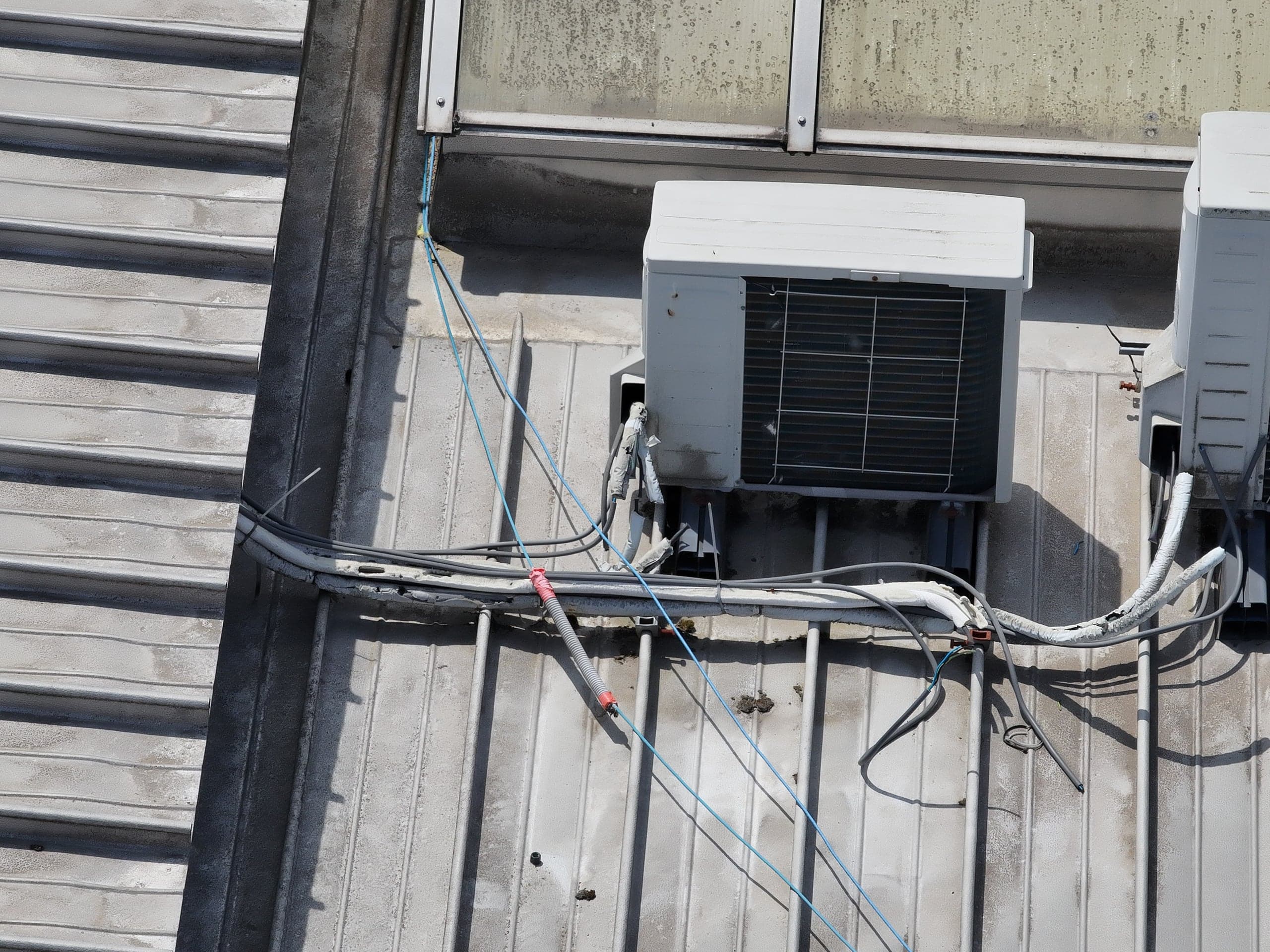
Raw capture compared with the annotated inspection image
Drag the slider to compare the raw drone photo with the version showing numbered points of attention per zone.
Drag or use the arrow keys
When scaffolding or an aerial lift is the better choice
A drone is the right instrument when you want to know where the problem is. When someone has to touch it, it no longer is.
Choose scaffolding or an aerial lift when the inspection coincides with the repair, when a material sample has to be taken, when something has to be tapped, probed or opened up, or when an expert has to make the assessment on the roof itself. Interiors, crawl spaces and fully covered structures are also outside what we do.
Choose a drone when you first want to know where you need to be, when the surface is large and the damage unknown, when you want to compare the condition year on year, or when putting up a scaffold is a project in itself. In practice the drone comes first, followed by targeted access to that one zone.
HOVVR holds an operational authorisation from the Belgian Civil Aviation Authority (BCAA) in the Specific category, based on a SORA risk assessment. Within the conditions of that authorisation we also work in urban environments and near uninvolved persons, where a flight in the Open category is not permitted. Flight preparation and the necessary permissions are included in your quote.
When thermography tells you something, and when you are mostly measuring the weather
A thermal capture shows temperature differences at the surface. That is not the same as moisture, and not the same as a leak. The difference only becomes meaningful when the temperature difference between inside and outside is large enough, when the surface has not just been warmed by the sun or cooled by rain, and when the material can be measured. Glass, bare metal and wet surfaces are hard to read.
A drone is strong on large or hard-to-reach surfaces: you see a complete roof plane in one capture and can compare zones with each other. A handheld camera is stronger indoors, for detailed work at eye level and when the thermographer wants to verify on site straight away.
We always deliver thermal images together with visual images of the same zone, never as a stand-alone conclusion. The radiometric files are included, so your thermographer or building surveyor can carry out their own analysis. The interpretation stays with them.
The report follows the reader
A contractor needs different information from an insurer, a building manager (syndic) or a technical property manager. That is why we organise the images by zone, name locations in plain language and deliver only the formats you will actually open.
What we record and what stays with your specialist
We document what is visible or measurable and mark zones that deviate. The structural, insurance or thermographic interpretation stays with the qualified specialist. That separation makes the dossier stronger: you know exactly what comes directly from the images, what is an indication and where further investigation is still needed.
Applications
- Condition of roof and façade
- Visible damage and anomalies
- Junctions and roof penetrations
- Façade details and ornaments
- Documentation after a storm or damage
- Thermal differences, on request
Delivery formats
| Format | What you receive |
|---|---|
| Report per zone, with images and numbered points of attention | |
| JPG | High-resolution detail images, organised by zone |
| JPG / PDF | Annotated overview images, optional |
| GeoTIFF | Orthographic roof or façade image, where the geometry allows |
| R-JPEG / TIFF | Radiometric thermal files, optional |
| Online | Shareable link for several stakeholders |
Does your team use other software? Tell us which, and we will match the delivery to it.
Frequently asked questions about roof and façade inspection
Does a drone inspection replace a full roof diagnosis?
No. A drone documents visible zones completely, but does not see through materials. Hidden moisture, structural damage or causes behind finishes sometimes require further investigation by a building surveyor.
When is thermography worthwhile?
When temperature differences can say something about your question, and when the weather, the load and the surface are suitable. We assess that before the assignment.
Do we need to give access to the building?
For most exterior captures, a safe take-off and observation zone is sufficient. Roof access, technical context or interior captures may require additional access.
Can residents or neighbours be informed in advance?
Yes. In occupied or sensitive surroundings we provide information in advance on timing, purpose, privacy measures and contact details.
Examples of a delivery
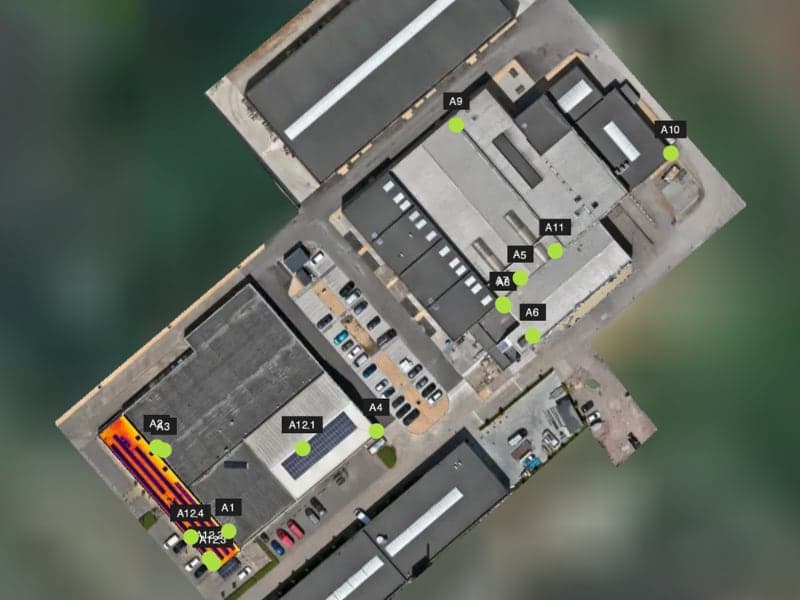 Assignment · Roof & Façade75 minutes of flight time
for the complete roof surface of several warehouses, with a list of priority repairs as the basis for the maintenance budget.
Roof inspection of industrial warehouses in Ninove
Ninove · property manager · Read the case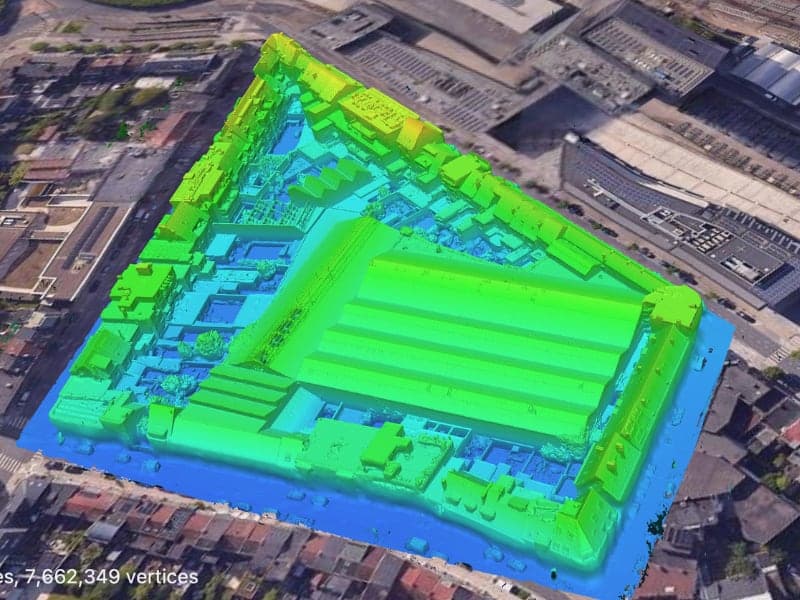 Assignment · Surveys37 buildings
recorded in five days as a baseline survey, with metadata per image for later verification.
Wall survey of adjacent buildings in Ghent
Ghent · land surveyor · Read the case
Send the address and a few photos
With the address and your main question, we check the airspace and propose a targeted inspection. Quote within two working days.